
November is Make-a-Will Month. If making or updating your will has been on your list, this is a good time to start.
The most useful thing you can do before meeting a lawyer is gather some information and think through a few decisions. You don’t need every answer. But arriving prepared makes the meeting more productive and helps make sure nothing important is missed.
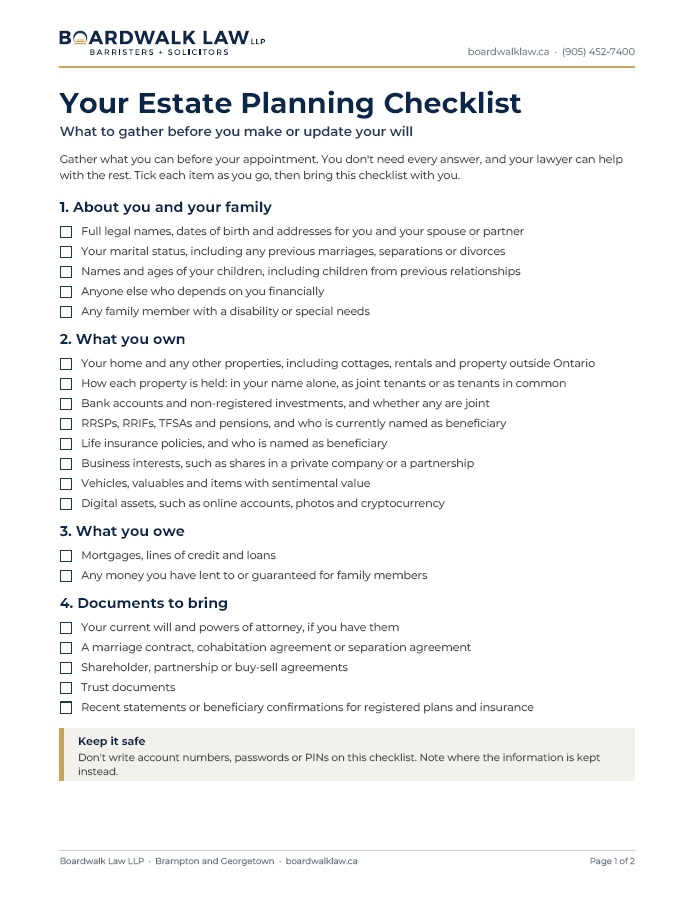
1. About you and your family
- Full legal names, dates of birth and addresses for you and your spouse or partner
- Your marital status, including any previous marriages, separations or divorces
- Names and ages of your children, including children from previous relationships
- Anyone else who depends on you financially
- Any family member with a disability or special needs
2. What you own
- Your home and any other properties, including cottages, rentals and property outside Ontario
- How each property is held: in your name alone, as joint tenants or as tenants in common
- Bank accounts and non-registered investments, and whether any are joint
- RRSPs, RRIFs, TFSAs and pensions, and who is currently named as beneficiary
- Life insurance policies, and who is named as beneficiary
- Business interests, such as shares in a private company or a partnership
- Vehicles, valuables and items with sentimental value
- Digital assets, such as online accounts, photos and cryptocurrency
3. What you owe
- Mortgages, lines of credit and loans
- Any money you have lent to or guaranteed for family members
4. Documents to bring
- Your current will and powers of attorney, if you have them
- A marriage contract, cohabitation agreement or separation agreement
- Shareholder, partnership or buy-sell agreements
- Trust documents
- Recent statements or beneficiary confirmations for registered plans and insurance
5. Decisions to think about
- Your estate trustee (executor): who will carry out your will, and an alternate
- A guardian for minor children: who would care for them, and an alternate
- Your attorney for property: who would manage your finances if you couldn’t
- Your attorney for personal care: who would make health and care decisions if you couldn’t
- Your beneficiaries: who receives what, and what happens if a beneficiary dies before you
- Specific gifts: particular items or amounts for particular people or charities
- Timing for young beneficiaries: at what age children or grandchildren should receive their inheritance
6. Questions to ask your lawyer
- Do my beneficiary designations match my will?
- Does how I hold title to my home still fit my plan?
- Should my plan include a trust?
- Could my plan reduce estate administration tax?
- How often should I review my plan?
What to expect when you make a will with Boardwalk Law
- First conversation. We learn about your family, your assets and what you want to achieve.
- Planning meeting. We review your checklist, answer questions and recommend the right documents. Meetings are available at our Brampton and Georgetown offices.
- Draft review. You review draft documents, ask questions and request changes.
- Signing. Your will and powers of attorney are signed with the required witnesses.
- Keeping it safe. We recommend a review after major life changes.
Quick FAQ
Information about your family, a list of what you own and owe, any existing will, powers of attorney and family or business agreements, and your thoughts on who you would name as estate trustee, guardian and attorneys.
No. Many people haven’t decided on an executor or guardian yet. Your lawyer can talk through the options with you.
Usually, yes. Your will applies after death. Powers of attorney cover you if you become unable to make decisions during your lifetime.
It depends on how complex your situation is. Having your information ready usually helps the process move faster.
Review it every few years and after major life events, such as marriage, separation, a new child, buying or selling a home, or a change in a business.
Ready to start?
Download the checklist, gather what you can, and book a meeting with our estate planning team. Before your appointment, it’s also worth reading about the most common mistakes people make when writing a will. Book an estate planning consultation.
Further reading
- What Should I Include in My Will?
- A Guide to Estate Planning in Ontario
- Earlier in the Beyond the Will series: Talking to Your Family About Your Will · Your Will Doesn’t Control Everything · What Happens to Your Home When You Die?